Windstar Cruises
Overview
Windstar Cruises sought to modernize its digital experience to deliver a seamless, guest-centric journey. The initiative focused on creating a flexible and intuitive booking experience while tightly integrating with core operational and reservation systems to unify the end-to-end customer experience
Solutions / Approach
End-to-End Modernization
As part of a broader digital modernization effort, TAA reimagined the customer experience from the ground up. The new platform introduced a refined visual design system that elevates the UI/UX while simplifying and streamlining the cruise discovery and booking journey in alignment with Windstar’s luxury brand.
Beneath the experience layer, TAA implemented a cloud-native, event-driven architecture built on AWS, leveraging a headless CMS to enable flexibility, scalability, and seamless integration across Windstar’s core systems and digital ecosystem.
TAA implemented a centralized GraphQL orchestration layer that unifies and manages data exchange between the experience layer and Windstar’s legacy systems. This approach simplifies integration complexity while enabling greater flexibility, scalability, and real-time responsiveness across the entire digital ecosystem.
Elevated Digital Experience Design
Strategic UI/UX Redesign for Modern Travelers
As part of the broader modernization initiative, TAA reimagined the Windstar B2C digital experience through a complete visual redesign focused on clarity, elegance, and brand elevation. The new design language introduces refined typography, intentional whitespace, and immersive imagery that reflects Windstar’s luxury positioning while guiding guests through a more intuitive and streamlined booking journey.
An editorial, story-driven approach to content and media composition shapes each page, creating a cinematic browsing experience that mirrors the sophistication and intimacy of life aboard Windstar’s fleet.
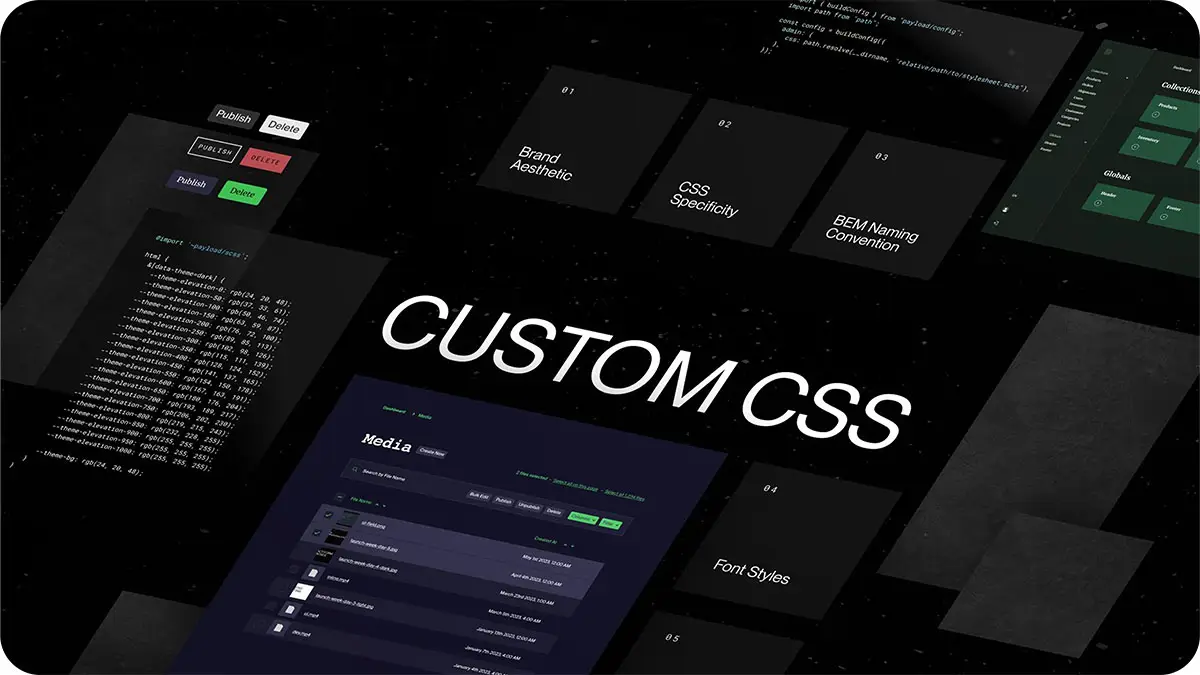
To support long-term flexibility, TAA developed a library of custom CMS modules with purpose-built styling and layout controls. These components empower Windstar’s web editors to assemble rich, brand-consistent pages directly within the CMS while maintaining design integrity and accelerating content publishing.
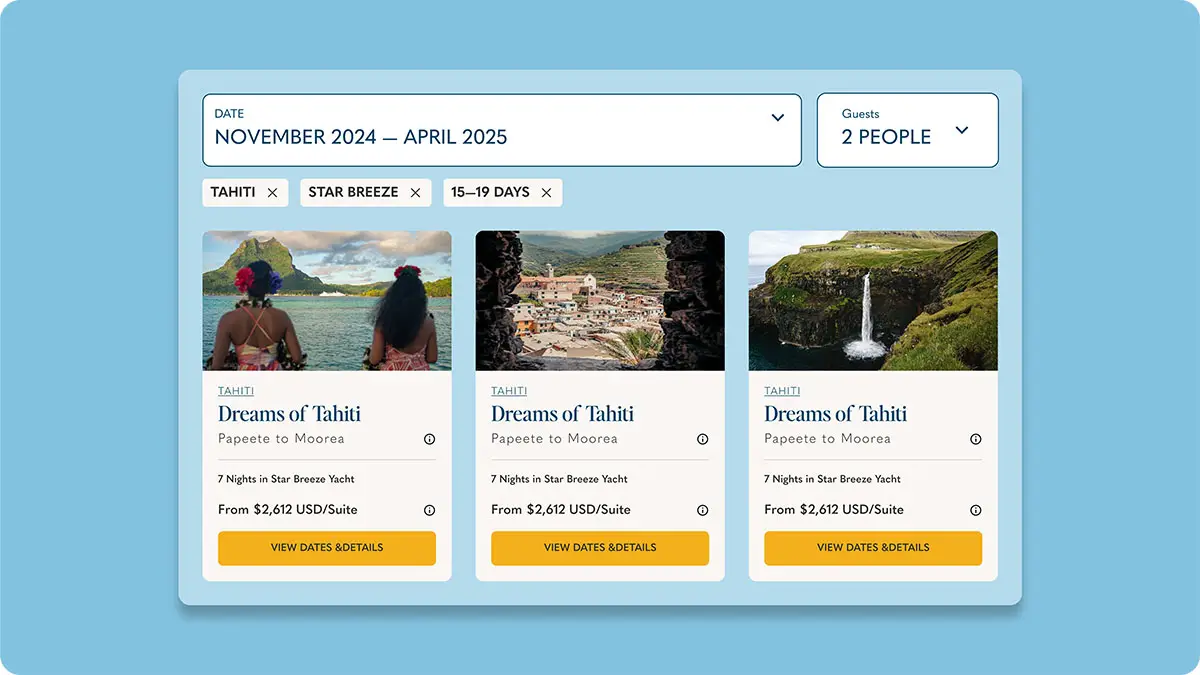
Online Booking & MyWindstar
Strategic UI/UX Redesign for Modern Travelers
TAA fully reimagined the Windstar B2C digital experience to elevate both aesthetics and usability. The redesigned platform delivers a more intuitive and streamlined booking journey while reinforcing Windstar’s refined luxury brand identity. An editorial, story-driven approach to content and media composition guides the experience end to end, creating an immersive and visually rich journey that reflects the sophistication and intimacy of the Windstar cruise experience itself.
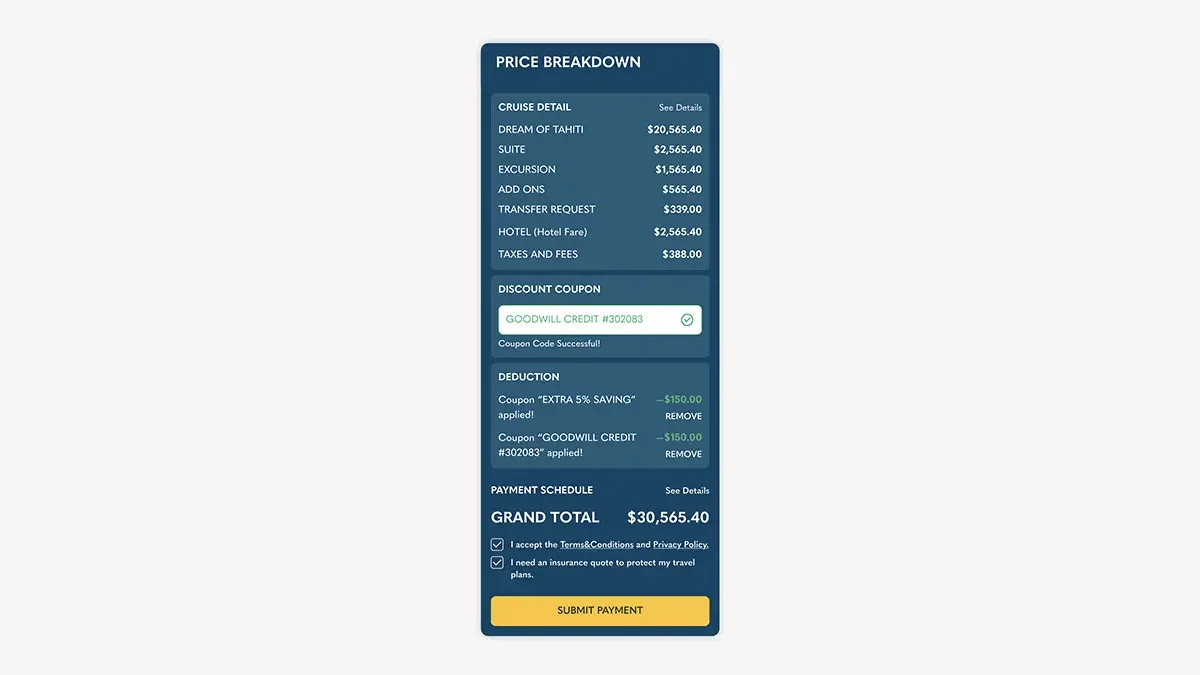
Development Solutions
Headless architecture, Payload CMS, Astro, custom Node.js Orchestration Layer
TAA partnered with Windstar Cruises to architect and deliver a modern, end-to-end digital platform anchored by a fully reimagined B2C experience and a unified orchestration layer. At its core, the platform leverages a headless architecture built on Payload CMS, Astro, and custom Node.js middleware that abstracts and extends Seaware through a centralized GraphQL API. This approach unlocks long-term flexibility, improved performance, and scalable evolution of the digital ecosystem.
Supporting the web experience, TAA implemented an integrated technology stack spanning a composable CMS, cloud-native infrastructure on AWS, and centralized API orchestration middleware. Together, these systems enable seamless communication between the experience layer and Windstar’s legacy platforms while creating a resilient foundation for continuous innovation and future digital expansion.
Strategy
Enhanced Security
Windstar Owned Guest Profile and Identity Access Management
Decoupled
Removes connection between systems to be abstracted.
Scalability
Each micro-service can be scaled independently.
Resilience
Failure in one service doesn’t bring down the entire system.
Extensibility
Provides framework for future enhancements (mobile app/shipboard services)
Flexible New integrations
Services can be easily added without disrupting existing ones.
Simplified software development
Flexibility to respond to business needs.
Reduced cost
Consolidates common functionalities and time spent on managing multiple systems and modern cloud infrastructure (autoscaling with containers vs full VM)
Single Data Source
Improves communication and data sharing across systems
Services Provided to Windstar Cruises
Design Systems
Brand Identity Systems
UX|UI Design
API Development & Integration
Technical Architecture
Technical Documentation
Frontend Engineering
Backend Engineering
Embedded Systems Engineering
System Integration Architecture
CI/CD Pipelines
Experience Innovation
Inventory Tools Integrations (CRMs)
Headless CMS Implementation
Service Design
Full-Stack Web Development
Guest Experience Platforms
Interaction Design
Platform Engineering
Service Blueprinting
Identity Systems